The Hiking Man Hikes North Dakota

The Urban Trail Hiker
Hiking in North Dakota offers adventurers a unique opportunity to explore the state's diverse landscapes, from the rolling prairies of the Great Plains to the rugged terrain of the Badlands. While North Dakota may not be known for its towering peaks or dense forests, its vast open spaces and unspoiled wilderness provide a serene backdrop for outdoor exploration. Trails wind through scenic river valleys, along picturesque lakeshores, and amid the iconic buttes of Theodore Roosevelt National Park, offering hikers a chance to immerse themselves in the natural beauty of the Northern Plains. Whether you're seeking a leisurely stroll along the Maah Daah Hey Trail or a rugged trek through the rugged terrain of the North Dakota Badlands, hiking in North Dakota is an opportunity to connect with nature and discover the hidden gems of the Peace Garden State.

Maah Daah Hey Trail

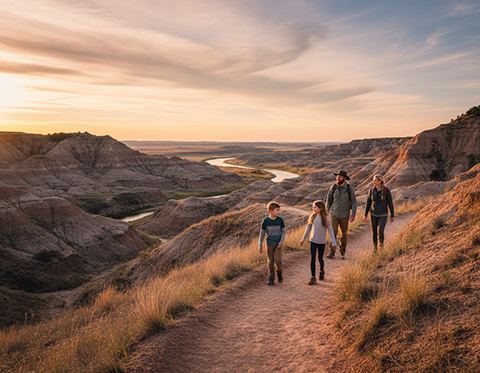
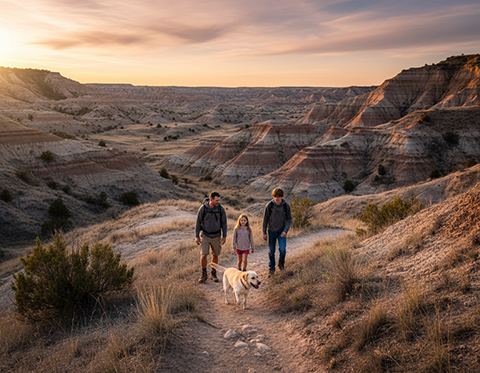
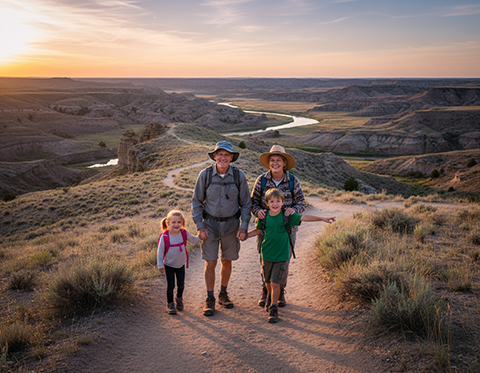
The Maah Daah Hey Trail is one of the most iconic long-distance hiking and mountain biking routes in the American plains, stretching for roughly 140 miles through the rugged badlands of western North Dakota. Winding through the dramatic landscapes surrounding Theodore Roosevelt National Park, the trail offers hikers an experience that feels surprisingly remote and wild compared to many better-known hiking destinations in the United States. The terrain constantly changes between rolling prairie, sharp ridgelines, colorful buttes, juniper-covered hillsides, and deeply carved canyons. Hikers often encounter sweeping panoramic views where the horizon seems endless, especially during sunrise and sunset when the badlands glow with shades of red, gold, and purple.
 Maah Daah Hey Trail

One of the most rewarding aspects of hiking the Maah Daah Hey Trail is the sense of solitude and immersion in nature. Unlike crowded national park trails, many sections of the route allow hikers to spend hours without seeing another person. Wildlife sightings are common and can include wild horses, mule deer, elk, coyotes, prairie dogs, and numerous birds of prey soaring above the cliffs. The trail’s constant elevation changes make it more physically demanding than many people expect from North Dakota, with repeated climbs and descents across exposed ridges and dry creek valleys. Because of the open environment, weather can also play a major role in the experience, with strong winds, intense summer heat, sudden thunderstorms, and muddy conditions after rain adding both challenge and adventure.

Many hikers choose to tackle the Maah Daah Hey Trail in smaller sections, while experienced backpackers may attempt multi-day thru-hikes that require careful planning and water management. Campsites along the route range from primitive backcountry spots to developed campgrounds near trailheads and recreation areas. The remoteness of the trail gives visitors a rare opportunity to experience the northern Great Plains in a raw and authentic way, far from major cities and busy tourist centers. For hikers who enjoy expansive scenery, quiet landscapes, and a strong sense of frontier wilderness, the Maah Daah Hey Trail delivers an unforgettable journey through one of the most underrated hiking regions in America.

Wind Canyon Trail

The Wind Canyon Trail in Theodore Roosevelt National Park is a short but incredibly scenic hike that showcases the dramatic beauty of the North Dakota badlands. Located in the park’s South Unit near the Little Missouri River, the trail is only about four-tenths of a mile long, making it accessible for hikers of nearly all skill levels. Despite its short distance, the route delivers expansive views of rugged cliffs, layered buttes, and winding river bends that capture the wild character of the northern plains. The trail climbs gradually along a ridge, giving hikers a constantly changing perspective of the surrounding landscape as they approach the overlook.
 Wind Canyon Trail

The name “Wind Canyon” comes from the powerful winds that often sweep through the area, shaping the rock formations and vegetation over countless years. Hikers quickly notice how exposed the trail feels, especially on breezy days when gusts race across the open ridges. The sparse grasslands and weathered badlands terrain create a landscape that feels both ancient and untamed. Along the trail, visitors may spot prairie wildflowers, soaring hawks, mule deer, or even bison grazing in the distance. The combination of open skies and colorful rock formations makes the hike especially beautiful during sunrise and sunset, when warm light transforms the canyon walls into shades of orange, gold, and deep red.

Although the Wind Canyon Trail is brief, many visitors consider it one of the most memorable viewpoints in Theodore Roosevelt National Park because of its peaceful atmosphere and striking scenery. The overlook provides an excellent place to pause and appreciate the immense scale of the badlands and the winding Little Missouri River below. Photographers are particularly drawn to the trail because the elevated vantage point allows for sweeping panoramic shots that highlight the contrast between river, prairie, and canyon formations. For travelers exploring western North Dakota, the Wind Canyon Trail offers a rewarding and easily accessible introduction to the rugged beauty that defines the region.

Caprock Coulee Trail

The Caprock Coulee Trail in the North Unit of Theodore Roosevelt National Park is one of the most scenic and varied hikes in North Dakota’s badlands region. This loop trail is approximately four miles long and gives hikers an excellent introduction to the rugged terrain, colorful rock formations, and sweeping prairie views that define the park. The trail begins with a gradual climb into rolling hills and coulees before reaching elevated ridges that overlook broad valleys and distant buttes. Along the route, hikers move through open grasslands, shaded juniper groves, and narrow sections of eroded badlands terrain that reveal the region’s dramatic geological history.
 Caprock Coulee Trail

One of the highlights of the Caprock Coulee Trail is the famous wooden footbridge that crosses a small ravine early in the hike. The bridge has become one of the most photographed features in the park because it contrasts beautifully against the surrounding badlands landscape. Beyond the bridge, the trail continues through a mix of exposed ridgelines and sheltered valleys where hikers may encounter wildlife such as bison, mule deer, prairie dogs, and wild turkeys. The changing terrain keeps the hike interesting, with some sections offering easy walking while others include steeper climbs and uneven ground. Because the trail passes through relatively open country, hikers are rewarded with expansive views in nearly every direction.

The Caprock Coulee Trail is especially beautiful during the early morning and evening hours when sunlight brings out the vivid reds, browns, and golds of the badlands formations. During summer, wildflowers dot the prairie, while autumn adds rich seasonal colors to the grasses and shrubs scattered across the hillsides. The peaceful atmosphere of the North Unit gives the trail a remote wilderness feel that many hikers find memorable and refreshing. Although the hike is moderately challenging in places, it remains accessible for many visitors who want a longer and more immersive badlands experience. For anyone exploring Theodore Roosevelt National Park, the Caprock Coulee Trail offers a rewarding combination of scenery, wildlife, and classic North Dakota landscapes.

Petrified Forest Loop Trail

The Petrified Forest Loop Trail in the South Unit of Theodore Roosevelt National Park is one of the park’s most adventurous and rewarding hikes. Stretching roughly ten miles depending on the chosen route, the trail leads hikers deep into remote sections of the badlands where colorful rock formations, rolling prairie, and ancient petrified wood create a landscape unlike anywhere else in North Dakota. The hike begins across open grasslands before gradually climbing into rugged hills and isolated valleys. Because portions of the trail travel through undeveloped backcountry, hikers experience a stronger sense of solitude and wilderness than on many of the park’s shorter scenic trails.
 Petrified Forest Loop Trail

The highlight of the hike is the large concentration of petrified wood scattered throughout the area. Millions of years ago, ancient forests once stood here, and over time buried trees gradually transformed into stone through mineralization. Today, hikers can see massive petrified logs and fragments embedded in the hillsides, often displaying beautiful colors ranging from deep brown and black to reddish and golden tones. The trail’s changing elevation provides sweeping views across the badlands, with layered ridges and distant buttes stretching toward the horizon. Wildlife sightings are also common, and hikers may encounter bison, wild horses, coyotes, prairie dogs, or soaring hawks while traveling through the quiet backcountry terrain.

TBecause of its length and exposure, the Petrified Forest Loop Trail requires more preparation than many other hikes in Theodore Roosevelt National Park. Water, sun protection, sturdy footwear, and navigation awareness are especially important since shade is limited and weather conditions can change rapidly. The remote setting, however, is exactly what makes the trail so memorable for many visitors. Far from roads and busy overlooks, hikers are able to experience the raw beauty and silence of the North Dakota badlands in a much deeper way. For those seeking a longer and more rugged hiking adventure, the Petrified Forest Loop Trail offers a fascinating combination of geology, history, wildlife, and expansive prairie scenery.

8-mile Bison Trail

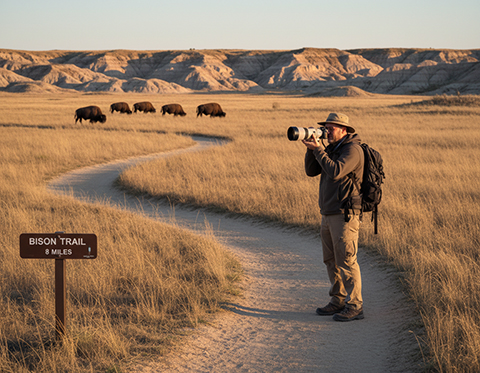
The Bison Trail in Theodore Roosevelt National Park offers hikers a longer and more immersive journey through the rugged badlands of western North Dakota. Often completed as an approximately eight-mile route depending on the chosen loop and connecting trails, the hike takes visitors through rolling prairie, steep coulees, rocky ridgelines, and open grasslands where wildlife is frequently visible. The trail provides a more remote experience than many of the park’s shorter scenic walks, allowing hikers to appreciate the vastness and quiet beauty of the badlands landscape. The terrain constantly changes throughout the hike, with sweeping overlooks revealing layered hills, winding valleys, and distant buttes stretching across the horizon.
 8-mile Bison Trail

As its name suggests, the Bison Trail is well known for wildlife encounters, especially sightings of the park’s iconic American bison herds. Hikers often see bison grazing along the hillsides or moving slowly across the prairie, creating unforgettable moments that capture the spirit of the Great Plains. Because the animals roam freely, hikers must remain alert and maintain safe distances at all times. In addition to bison, mule deer, prairie dogs, coyotes, wild horses, and numerous bird species may also be seen along the route. The trail’s mix of open spaces and elevated ridges provides excellent opportunities for photography, especially during the early morning or evening when sunlight enhances the rich colors of the badlands formations.

The Bison Trail can be physically demanding because of its length, elevation changes, and exposed conditions. Summer temperatures can become quite hot, and shade is limited across much of the route, making water and sun protection essential. Despite these challenges, many hikers consider the trail one of the most rewarding ways to experience Theodore Roosevelt National Park because it combines solitude, wildlife, and dramatic scenery into a single adventure. The peaceful atmosphere and expansive views create a strong sense of connection to the untamed prairie landscape that once covered much of the American West. For hikers seeking a longer backcountry-style experience in North Dakota, the Bison Trail offers a memorable exploration of the state’s rugged natural beauty.

On-A-Slant Village Trail

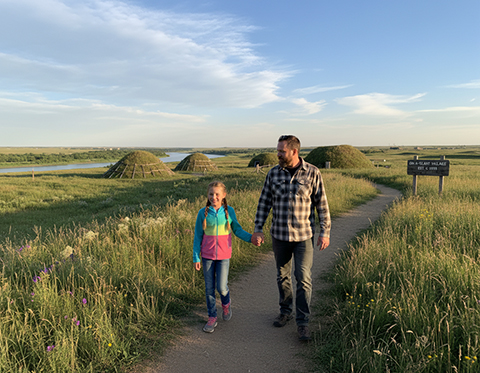
The On-A-Slant Village Trail near the Knife River Indian Villages National Historic Site offers hikers a fascinating blend of natural scenery and Native American history. This relatively short and easy trail follows the landscape once occupied by a thriving Mandan earthlodge village that stood along the Missouri River centuries ago. As visitors walk the trail, they pass through rolling prairie terrain dotted with interpretive signs that explain the history, culture, and daily life of the Mandan people who lived in the settlement. The route allows hikers to experience not only the beauty of the North Dakota plains but also the deep cultural significance of the area.
 On-A-Slant Village Trail

One of the most striking features of the trail is the visible outline of former earthlodge depressions that remain in the ground. These circular impressions mark where homes once stood before the village was abandoned in the late eighteenth century. The trail also passes reconstructed sections of defensive trenches and palisades that help visitors imagine what the settlement may have looked like during its peak. Along the way, hikers can enjoy wide views of the surrounding prairie and river valley while learning about the agricultural traditions, trade networks, and resilience of the Mandan people. The peaceful grassland setting creates a reflective atmosphere that encourages visitors to slow down and appreciate the historical importance of the site.

Although the hike itself is not physically difficult, the On-A-Slant Village Trail offers a deeply rewarding educational and cultural experience. Seasonal prairie wildflowers, open skies, and gentle rolling hills add to the beauty of the landscape throughout the year. Birdwatchers may also spot hawks, meadowlarks, and other prairie species along the route. Many visitors find that the combination of archaeology, history, and quiet natural surroundings makes this trail one of the most meaningful walks in North Dakota. For those interested in both outdoor exploration and the heritage of the northern plains, the On-A-Slant Village Trail provides a memorable journey into the history of the American Midwest.

Sheyenne River Valley Scenic Byway Trail

The Sheyenne River Valley Scenic Byway offers hikers a chance to experience one of the most beautiful and historically rich regions in eastern North Dakota. Stretching through the forested hills and rolling river valleys of the Sheyenne River corridor, the area contains numerous hiking opportunities that showcase landscapes very different from the rugged badlands found in western parts of the state. Trails along the byway wind through dense hardwood forests, prairie grasslands, wetlands, and scenic overlooks above the winding Sheyenne River. Hikers often enjoy the peaceful atmosphere created by the combination of flowing water, tree-covered hills, and quiet rural surroundings.
 Sheyenne River Valley Scenic Byway Trail

One of the most popular hiking areas along the scenic byway is Fort Ransom State Park, where trails travel through wooded valleys and open prairie ridges that are especially colorful during autumn. The region is also closely connected to the historic North Country National Scenic Trail, allowing hikers to explore longer routes through some of the state’s most scenic terrain. Wildlife is abundant throughout the river valley, and hikers may encounter white-tailed deer, wild turkeys, foxes, songbirds, and a variety of waterfowl near the wetlands and riverbanks. In spring and summer, wildflowers and green hillsides create vibrant scenery, while the changing leaves of fall transform the valley into one of North Dakota’s premier seasonal destinations.

Hiking along the Sheyenne River Valley Scenic Byway is often more relaxed and shaded than many trails elsewhere in North Dakota, making it appealing for families, casual hikers, and photographers. The rolling hills and river crossings create a landscape that feels surprisingly lush compared to the open plains many people associate with the state. Small towns, historic sites, and scenic picnic areas along the byway also allow hikers to combine outdoor recreation with cultural exploration and quiet roadside travel. Whether visitors are taking a short nature walk or spending an entire day exploring the valley’s interconnected trail systems, the Sheyenne River region offers a peaceful and scenic outdoor experience that highlights another side of North Dakota’s natural beauty.

North Country National Scenic Trail

The North Country National Scenic Trail offers hikers a unique opportunity to explore the peaceful landscapes of eastern North Dakota while traveling along one of the longest hiking trails in the United States. Stretching across multiple states from Vermont to North Dakota, the trail’s North Dakota section passes through the scenic Sheyenne River Valley and nearby prairie regions, showcasing rolling hills, wooded river corridors, wetlands, and open grasslands. Unlike the dramatic mountains found on some national scenic trails, this portion of the route emphasizes quiet natural beauty, wide-open skies, and the gentle terrain of the northern plains. Hikers often appreciate the calm atmosphere and the sense of solitude found along these less-traveled sections of trail.
 North Country National Scenic Trail

One of the most popular areas for hiking the North Country Trail in North Dakota is near Fort Ransom State Park, where the trail winds through forested hills and follows the scenic bends of the Sheyenne River. The changing landscape provides a pleasant variety of hiking environments, including shaded woodland paths, grassy ridges, river overlooks, and stretches of prairie filled with wildflowers during the warmer months. Wildlife is commonly seen along the trail, including deer, foxes, hawks, songbirds, and waterfowl near marshy areas. Autumn is especially beautiful in the river valley, as the trees display vibrant shades of gold, orange, and red that contrast against the surrounding prairie landscape.

Hiking the North Country National Scenic Trail in North Dakota is generally more relaxed and accessible than many rugged mountain trails, making it appealing to casual hikers, backpackers, and nature photographers alike. The trail’s peaceful setting encourages visitors to slow down and enjoy the quiet rhythm of the plains, far from crowded tourist destinations. Small towns and historic sites near the route also add cultural interest to the experience, giving hikers opportunities to learn about the region’s pioneer and Native American history. Whether someone is exploring a short day-hike segment or completing a longer backpacking journey, the North Dakota section of the North Country Trail provides a rewarding look at the natural beauty and tranquility of the upper Midwest.

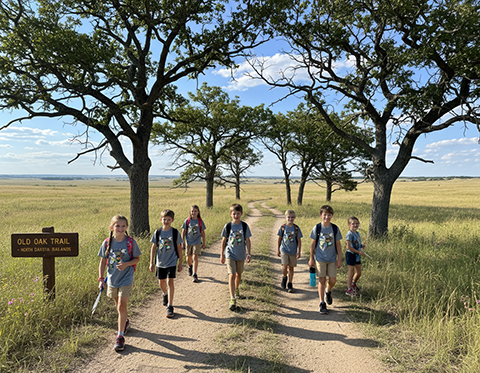
Old Oak Trail

The Old Oak Trail in Lake Metigoshe State Park is one of the most historic and scenic hiking trails in North Dakota. Located in the forested Turtle Mountains near the Canadian border, the trail winds for about three miles through a surprisingly lush landscape filled with aspen, birch, and oak trees. Certified in 1976 as North Dakota’s first National Recreation Trail, the route offers hikers a peaceful woodland experience that feels very different from the open prairie and badlands commonly associated with the state. The trail’s gentle hills, shaded pathways, and quiet atmosphere make it a favorite destination for nature lovers seeking a relaxing outdoor hike.
 Old Oak Trail

As hikers follow the Old Oak Trail, they encounter a variety of natural features and interpretive markers that explain the area’s ecology and history. The trail loops through dense forest sections, skirts wetlands, and occasionally opens to views of nearby lakes and rolling hills. Wildlife sightings are common and may include white-tailed deer, songbirds, squirrels, and waterfowl around the marshy areas. During autumn, the trail becomes especially beautiful as the oak and aspen leaves turn bright shades of gold, orange, and red. In spring and summer, wildflowers and thick green foliage create a cool and refreshing hiking environment that contrasts sharply with the drier western regions of North Dakota.

The Old Oak Trail is also popular because it can be enjoyed year-round for multiple outdoor activities, including hiking, mountain biking, snowshoeing, and cross-country skiing. Its moderate terrain makes it accessible for families and casual hikers while still providing enough distance and elevation changes to feel like a rewarding nature excursion. The peaceful forest setting encourages visitors to slow down and appreciate the quieter side of North Dakota’s outdoors. For travelers exploring the Turtle Mountains or the scenic Lake Metigoshe region, the Old Oak Trail offers a memorable combination of history, wildlife, and woodland beauty that showcases one of the state’s most charming hiking destinations.

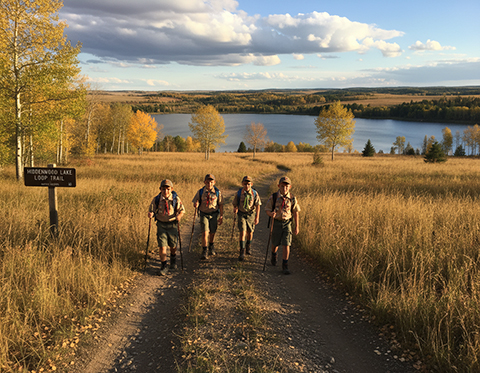
Hiddenwood Lake Loop Trail

The Hiddenwood Lake Loop Trail offers hikers a peaceful journey through one of the quieter and more scenic prairie landscapes in North Dakota. Located within the Hiddenwood National Wildlife Refuge region, the trail circles Hiddenwood Lake and passes through rolling grasslands, wetlands, and scattered groves of trees that provide a calm and relaxing outdoor setting. The route is popular among hikers who enjoy birdwatching, photography, and nature observation rather than steep or rugged mountain terrain. Gentle hills and open views across the lake create a tranquil atmosphere that showcases the natural beauty of the northern plains.
 Hiddenwood Lake Loop Trail

As hikers travel the loop, they often encounter a wide variety of wildlife that thrives in the refuge’s protected habitat. Waterfowl, shorebirds, hawks, and songbirds are especially common around the lake and marsh areas, making the trail particularly attractive during spring and fall migration seasons. Deer and smaller mammals may also be seen moving through the grasslands or wooded sections near the shoreline. The changing scenery along the route keeps the hike visually interesting, with open prairie giving way to wetlands, cattail marshes, and patches of native vegetation. During summer, wildflowers bloom across the hillsides, while autumn brings softer golden tones to the grasses and trees surrounding the lake.

The Hiddenwood Lake Loop Trail is generally considered an easy to moderate hike, making it accessible for families, casual hikers, and visitors looking for a quiet outdoor experience away from crowded destinations. The peaceful surroundings and relatively undeveloped setting allow hikers to fully appreciate the sounds of wind, birds, and rustling prairie grasses. Unlike the dramatic badlands of western North Dakota, this trail highlights the softer and more subtle beauty of the state’s prairie lake country. For those seeking solitude, wildlife viewing, and scenic lakeside walking, the Hiddenwood Lake Loop Trail provides a rewarding look at the diverse natural environments found across North Dakota.